

 (
(
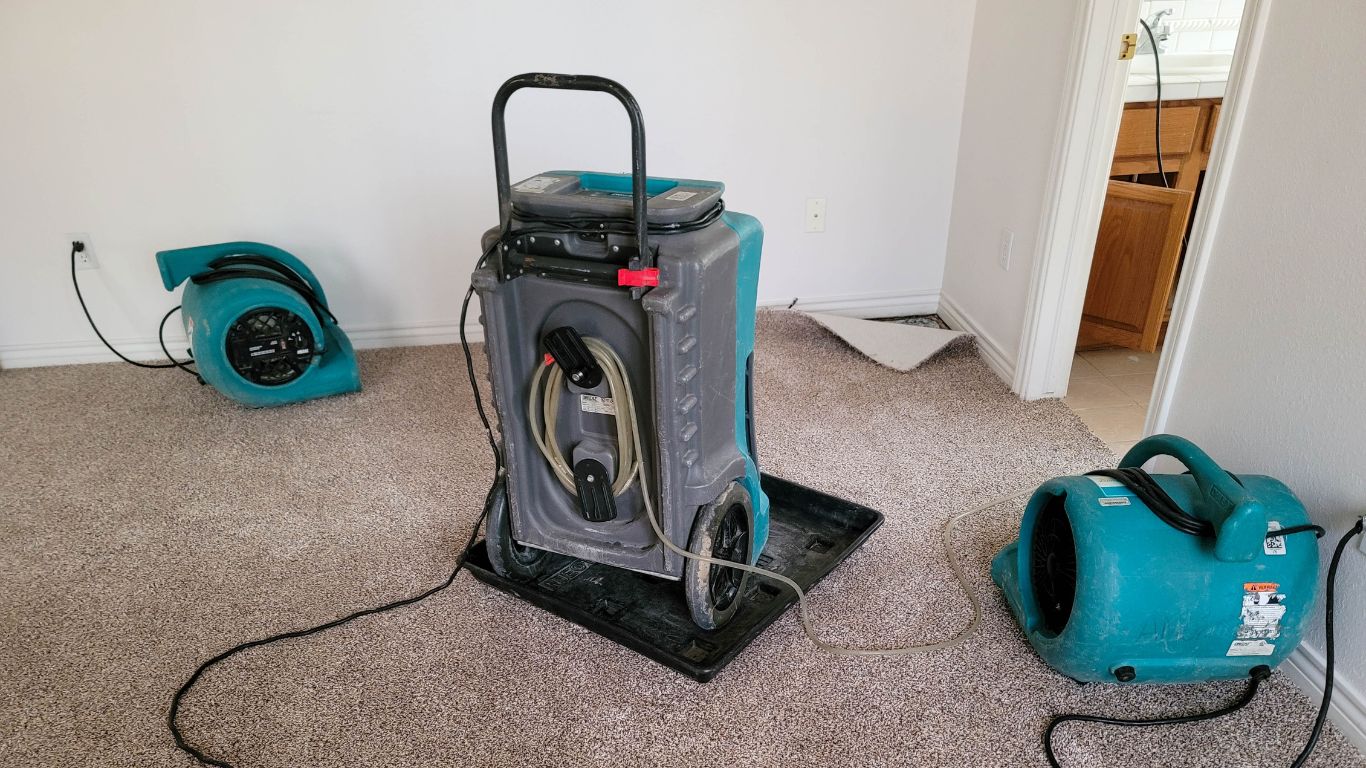
When Indoor Air Feels Heavy Dehumidification Lightens the Load
If your house feels moist and sticky even with the AC running, you already have moisture issues. Dehumidification in a building plays a much bigger role in the comfort and protection of the house than most people think. In areas with high humidity, excess moisture is not only unpleasant but also a silent source of damage to buildings, air quality, and even the occupants’ health.
Moisture can quickly turn into costly repairs if not promptly and adequately addressed; this is what we at All Dry Services of Greater Charlotte witness daily.
What Dehumidification Actually Does
Dehumidification is a process that removes excess moisture from the air in your house. The process of level air, which reaches a point where it feels lighter, cleaner, and safer to swirl. On the other hand, if humidity is high, walls, floors, and furniture may absorb water vapor, and even insulation.
High moisture conditions are not always due to massive leaks. The activities we do every day, for example, cooking, showering, and washing, contribute to the moisture in the air. If you also have poor airflow or have had a water problem in the past, the humidity will increase quickly.
Dehumidification reduces indoor humidity to a healthy level, preventing mold growth, unpleasant odors, and long-term damage to your home.
Why High Humidity Becomes a Problem Fast
Humidity above 60 percent creates the perfect environment for mold growth. Mold spores exist everywhere, but moisture lets them grow and spread. You may notice musty smells, damp walls, or condensation on windows.
High humidity is another factor that contributes to the perception of warmth in your house. The discomfort from humidity is so severe that many people tend to lower the thermostat, which in turn increases the electricity bill and does nothing to address the real cause.
Dehumidification does not involve shallow treatment; it involves deep treatment.
Common Signs Your Home Needs Dehumidification
Some warning signs feel subtle at first. Others show up after damage already starts.z
Look out for:
- Persistent musty or earthy odors
- Condensation on windows or pipes
- Warped wood floors or swelling cabinets
- Mold spots on walls or ceilings
- Allergy symptoms that worsen indoors
- That constant damp feeling in basements or crawl spaces
Oftentimes, All Dry Services of Greater Charlotte gets ringing customers who complain that using air fresheners or increasing AC time hasn’t helped at all, and the issue has persisted.
How Dehumidification Protects Your Home
Dehumidification is not merely a comfort-enhancing measure; it also serves to protect the house’s structure.
The adverse effects of excess moisture include weakened drywall, wood decay, and deterioration of insulation. In the long run, it can lead to the weakening of framing and flooring. Moreover, he attracts insects such as termites and roaches, which are found in most environments, thereby supporting the cycle of infestation.
Dehumidification by way of control protects only to prevent costly, invasive future repairs.
The Link Between Moisture and Mold
Mold needs moisture to grow. Without it, mold can’t spread. Dehumidification plays a key role in mold prevention by removing the moisture that mold needs to grow.
If your home has previously experienced water damage, humidity might still be trapped in some areas even after the surface has dried. It’s why expert dehumidification is essential in restoration. It draws out moisture from the inside of materials, not only from the air you breathe.
Dehumidification and Indoor Air Quality
High humidity levels affect the air you breathe and its quality. Damp air is a medium for dirt, allergens, and pollutants, which can stay in the atmosphere longer. It is one of the causes of asthma and allergies, and it also triggers respiratory irritation.
Dehumidifiers address problems with indoor air quality by eliminating conditions that support the survival of allergens. Many people find that their allergy symptoms are less severe when the humidity is low.
Daily life at home becomes more pleasant with fresh and properly balanced air.
When Dehumidification Becomes Essential
Some homes require dehumidification more than others. Moisture remains in basements, crawl spaces, bathrooms, and laundry rooms. Old houses are frequently plagued by humidity problems, especially those with poor ventilation. Dehumidification should be a post-water-damage procedure. Water in the open area should not only be dried but also removed. Moisture is always present behind walls, beneath floors, and inside insulation.
All Dry Services of Greater Charlotte employs professional-grade dehumidification devices during restoration to prevent secondary damage to the property, such as mold growth and structural weakening.
Store-Bought Units vs Professional Dehumidification
Small portable units help with mild humidity issues. Air conditioners work quite efficiently in bedrooms or other small areas; however, they do not perform well in humid conditions. On the other hand, professional dehumidifiers can draw and dissipate air faster than air conditioners, and they can also pass through building materials. They can also check and adjust humidity levels based on the drying conditions. Professional dehumidification dries the area and is the safest and most reliable method when moisture is present throughout or if water damage has occurred.
How Dehumidification Supports Energy Efficiency
Dehumidification is the process of removing excess moisture from the air, which in turn makes it easier for the air conditioning unit to operate at its most efficient level and thus to cool the room effectively. It commonly results in lower electricity bills and reduced workload for the HVAC system. Normal humidity levels are sufficient to eliminate condensation in the ducts, reducing or preventing mold growth while keeping the air flowing well.
Why Timing Matters With Dehumidification
Issues linked to moisture are not self-resolving. Long periods of high humidity cause greater damage. The rapid removal of moisture keeps restoration costs down and the extent of repairs small.
Immediate dehumidification after every leak, flood, or broken pipe prevents moisture from going deeper into your home. It reduces drying time and lowers the risk of mold growth.
At All Dry Services of Greater Charlotte, we are always stressing the importance of taking action early. It is a time, money, and stress-saver in the long run.
Keeping Humidity Under Control Long-Term
Dehumidification is most effective when it’s integrated into a moisture management plan covering the entire building. Proper ventilation, drainage, and regular inspections will prevent humidity levels from fluctuating too much.
All the same, simple habits like using exhaust fans, fixing leaks promptly, and maintaining gutters will also work in combination with effective dehumidification to keep moisture levels in a building within the desired range.
When humidity keeps returning despite these efforts, it’s often a sign of hidden moisture issues that need professional attention.
A Practical Approach to Healthier Homes
Dehumidification doesn’t have to be challenging. Instead, it is to create an indoor environment that is cleaner and safer for your home and its occupants. According to All Dry Services of Greater Charlotte, knowledgeable homeowners make the right decisions. Knowledge of the dehumidification process will enable you to detect issues early and take the right actions confidently.
Moisture might feel invisible, but its effects aren’t. Addressing humidity the right way keeps your home comfortable, durable, and safe for years to come.
To stay current with us, please follow our Facebook and Instagram pages.